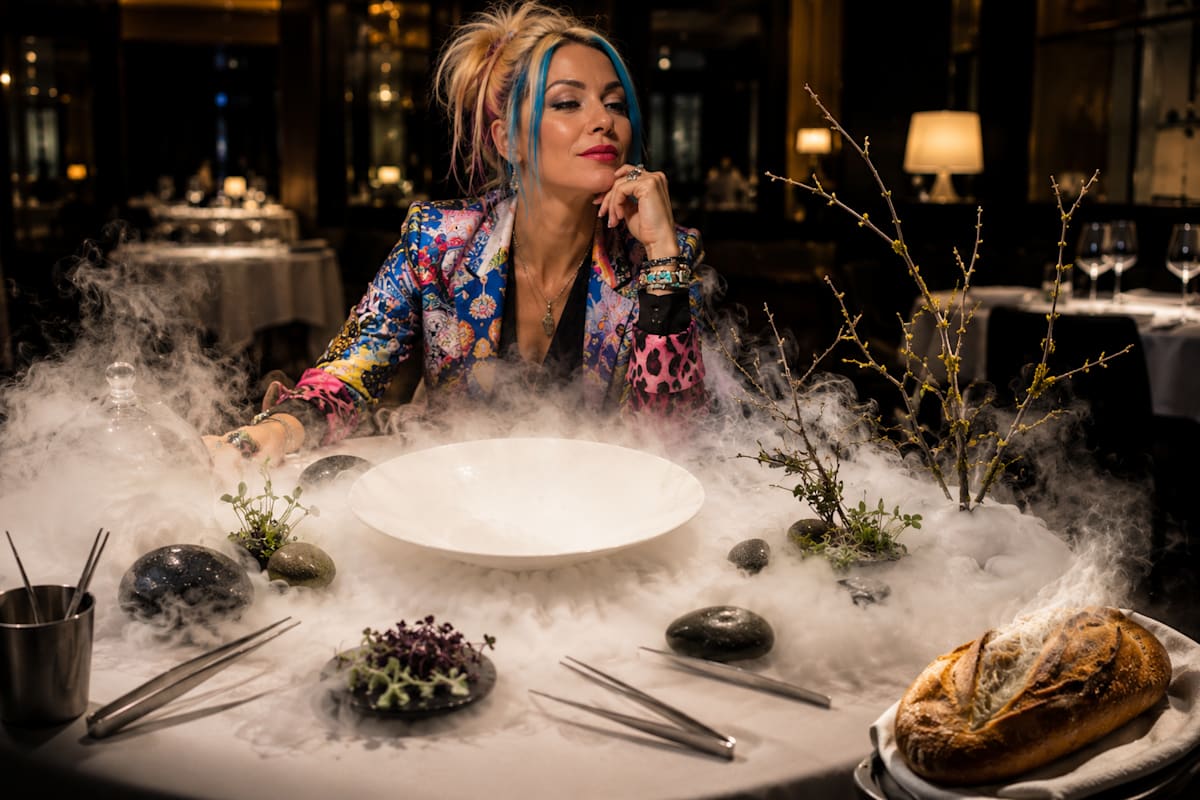
There are certain subjects upon which humanity has displayed such unwavering confidence that one hesitates to question them, not because they have been conclusively settled, but because everyone appears so delightfully occupied pretending that they have. Fine dining, I have increasingly come to suspect, belongs to this distinguished collection of agreeable misunderstandings.
Somewhere, although nobody seems able to identify the precise afternoon on which it happened, the simple ambition of serving an unforgettable meal quietly abandoned the dining room without announcing its departure, leaving in its place an ambitious cousin whose principal occupation consists of arranging edible objects into increasingly improbable geometries while hoping that at least one of them will be photographed before it grows cold.
One imagines that, hidden beneath the immaculate stainless steel of some anonymous culinary laboratory, there must exist a Ministry of Astonishment, staffed by earnest officials whose solemn responsibility is to ensure that no guest ever encounters the dangerous tranquillity of recognising dinner as dinner. Their regulations, no doubt drafted with impeccable bureaucratic seriousness, must require that every plate arrive concealed beneath smoke, balanced upon a stone imported from an island whose greatest export is apparently decorative pebbles, or suspended from a branch thoughtfully rescued from whatever tree had the misfortune of growing near the purchasing department.
The food, naturally, is expected to participate in this spectacle with the dignified patience of an actor who gradually realises that the audience has spent the entire performance admiring the curtains.
There was, however, another understanding of hospitality, one so unfashionably modest that it rarely demanded applause. It proposed the almost revolutionary notion that the highest achievement of a cook was not to astonish the diner into silence through theatrical ingenuity, but to persuade them, by means of flavour alone, that for a few blessed moments the world outside the restaurant had ceased to deserve their immediate attention.
This, I realise, is a disappointingly unprofitable philosophy in an age where a million people may admire a photograph of a plate they shall never taste, while the memory of an extraordinary sauce continues its hopeless refusal to appear on Instagram with the same enthusiasm as a cloud of dry ice.
The tragedy is not that modern chefs have become less talented. On the contrary, they possess techniques that would have appeared miraculous to many of their predecessors. The tragedy is subtler, and therefore considerably more dangerous. Somewhere along the road, technique quietly promoted itself from faithful servant to self-appointed monarch, while flavour, hospitality and pleasure accepted the humiliating position of ceremonial advisers whose opinions are politely requested shortly after the important decisions have already been taken.
A Final Thought
If you’ve read this far, perhaps you suspect—as I do—that food has never really been only about food.
It has always been about vanity and generosity, rituals and absurdities, ambition and affection, and those curious moments in which a single meal manages to reveal more about human nature than an entire shelf of sociology books.
Those are precisely the questions that inspired my novel, What Mari Is Cooking and the Farce Served upon a Golden Platter. It is not a cookbook, although food appears on nearly every page. It is a satirical novel about fine dining, human ambition, and the strange theatre we build around both.
If essays like this are your cup of tea, you might enjoy the novel as well.
And if you’d like to receive future essays on gastronomy, hospitality, literature, and the wonderfully ridiculous habits of modern society, I’d be delighted if you joined my newsletter.
No algorithms. No spam. Just occasional thoughts worth serving while still warm.